Wooden dollhouses, multi-storey homes and compact playsets, from shelf-sized to a whole corner. Here is how the material...
Take a tape measure and walk to the corner of the room you have in mind. Measure the width and the depth, then lift the tape and measure the height up to the shelf above it.
Those three numbers settle half the decision before you open a single product page. A dollhouse is not a toy that goes back in a box at the end of the day; it is a small piece of furniture that stays where you put it for months.
The parent who buys first and measures second ends up with a house standing in the hallway.
Wood against plastic: four practical differences
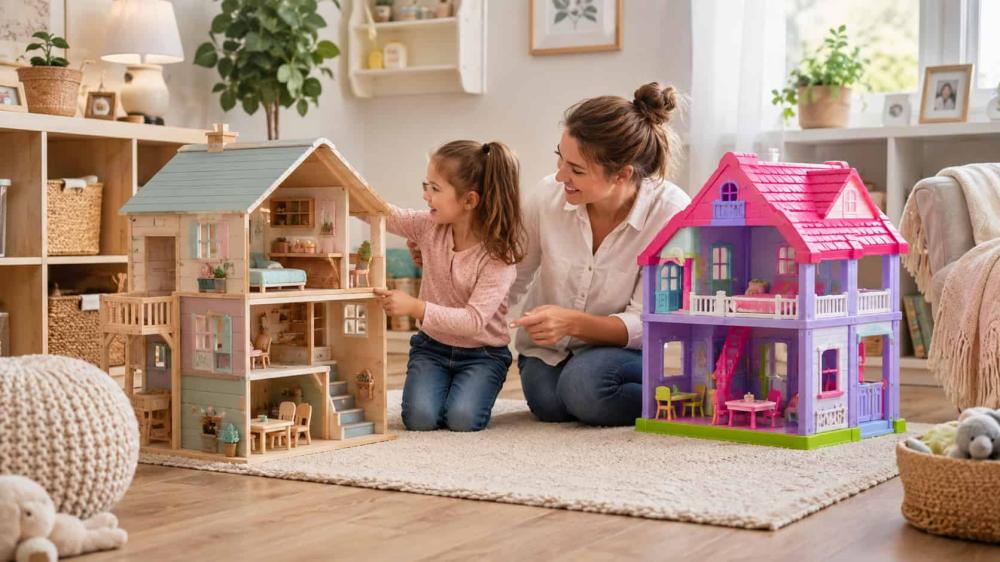
- Stability. A wooden house is heavier, so it does not tip when a child pulls a drawer or leans on a balcony. A light plastic one slides on a smooth floor.
- Sound. The difference everybody overlooks. Wood gives a soft knock as furniture goes down; plastic gives a repeated clatter audible from the next room.
- Repair. Broken wood takes glue and a screw. Broken plastic is usually the end of it.
- Carrying. A plastic house moves between rooms in a child's own hands; a wooden one needs an adult. That decides whether the house follows the child or the child follows the house.
The practical summary: wood for a house that stays in one place for years, plastic for one that moves, travels and goes into a box.
Measuring the space in three steps
- The width of the house plus twenty centimetres on each side, so a hand reaches the side rooms.
- Sitting space in front: half a metre at least. A child sits cross-legged, and a house against a wall needs room in front of it rather than behind.
- Height above it: a multi-storey house needs clearance overhead for a hand to come in from the top, especially with houses open on one side only.
A rule that shortens the sum: walk four long strides across the space. If you finish them, you have three metres — enough for a large house and two children at once.
Open-sided and closed houses
A design difference that decides how many children play together.
A house open on one side seats one child in front and can go back against a wall, saving space. The better fit for a narrow room.
A house open on both sides seats two children sharing the floors. It needs room all around rather than only in front, so it never goes flush against a wall.
The choice here follows the number of children rather than your taste. Two small houses serve two children better than one large house they argue over.
What comes inside and what is bought separately
This causes more confusion at the shelf than anything else.
Some houses arrive fully furnished with figures; some arrive as an empty shell. And some sets sell the furniture and figures alone with no house at all.
Read the piece count rather than the photograph, because the photograph usually shows the house fully furnished. Anyone buying a shell assuming it is complete finds their child looking at empty rooms.
The pieces that complete it sit in accessories for dolls.
Doll size against room size
A house is built around one doll size, and a larger doll will not fit through the door.
There is no shared standard between brands, so a house that serves a ten-centimetre doll will not serve a thirty-centimetre one. The only reliable method is to measure the height of a single floor and compare it against the doll your child already owns.
If you are buying house and doll together, buy the house first and pick the doll to match. The reverse locks you into one house with no choice. Sizes sit in pocket dolls and characters and the plush and teddy section.
Assembly and storage: what decides the fate of the house
Large houses arrive flat-packed, and how they go together decides whether they move with you or stay put forever.
- Screw assembly. Comes apart and back together repeatedly, suiting anyone who moves house or stores toys seasonally.
- Glued or permanently slotted assembly. Built once; taking it apart breaks it. Decide its place before you open the box.
- Folding houses. They close like a case with the furniture inside, and they are the only answer for a room that cannot take a fixed piece.
A practical tip: keep the assembly key and spare screws in a bag taped to the back. A screw lost after a year means a house that wobbles and never sits straight again.
Keeping the small pieces together
What ends most dollhouses is not breakage but losing the furniture. The little chair, the spoon and the pillow vanish under a bed within weeks, the house stands empty, and the child loses interest.
The answer is a small open box beside the house rather than inside it, where pieces gather at the end of play. An open box works and a closed one does not, because children do not open what they cannot see.
Ages: when dollhouse play begins
A house is a pretend-play toy, and pretend play matures at a particular point.
Under three a child is content putting pieces in and taking them out, without building a story. From three to five the scene begins: the doll sleeps, eats and receives visitors. From five upward the stories grow complicated and characters arrive from other toys.
Which is why so many buy too early, and the house sits a year before it gets real use. Other kinds of dolls sit in every type of doll, and the small figures that move into the house in the figure range.
Before you clear the corner
Measure first: house width plus twenty centimetres each side, half a metre in front for sitting, and clearance overhead for a hand. Then choose the material by whether it stays put or moves.
Read the piece count rather than the photo, and measure floor height before assuming your child's doll fits through. And do not buy before three, because scene play has not started yet.
For the small surprises that bring new characters into the house, see blind boxes.