No buzzer and no flashing light when a child gets it wrong. The piece simply will not go in. What Montessori means in a...
Put two pieces in front of your child. One claps and lights up when they get it right and buzzes when they get it wrong. The other does nothing at all: it goes in when they are right and refuses when they are not, and that is the whole of what it says.
The silent piece is the Montessori principle in one sentence. With it a child waits on nobody's verdict; they see with their own eyes that the piece did not fit, and they try another.
1. What Montessori means in a toy
The word now appears on plenty of products, most of which carry none of the principle. Three conditions separate them:
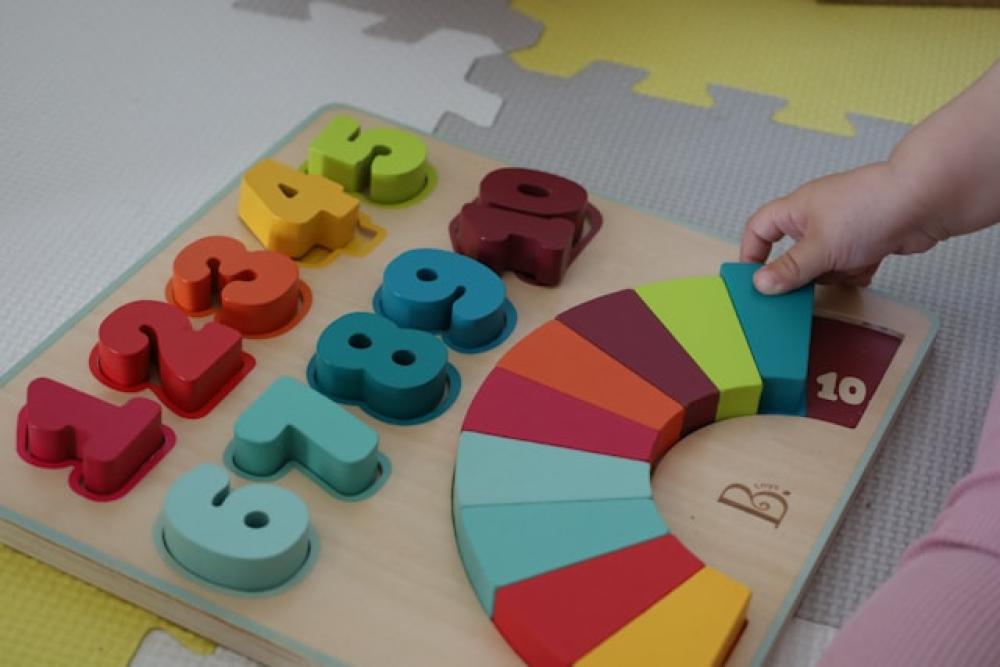
- Self-correction. The toy itself shows the error with no go-between: the piece will not enter, the tower leans, or an empty space is left at the end.
- Isolating the difficulty. Each piece tests one skill. A board where only size varies, another where only colour does.
- Realism. Images and objects resemble the real world rather than cartoons, so a child ties what is in their hand to what they see outdoors.
A toy carrying the name without meeting all three is an ordinary toy wearing a label.
2. A toy that corrects against a toy that applauds
A toy that applauds moves the verdict from the child to the device. They start acting to hear the sound rather than to understand, and when the sound stops so does their interest.
A silent toy leaves the verdict with them. They try, the piece refuses, they try another without feeling that anyone logged their mistake. That lowers their fear of attempting, and it is the most valuable thing this shelf builds.
Parents notice a practical effect within a fortnight: the child asks for help less. They no longer need someone to say right or wrong.
3. Why wood specifically
Wood is not an indulgence on this shelf but part of the idea. Three reasons:
- Weight carries information. A wooden piece registers in the hand, so a child senses its size before looking at it. Light plastic hides that difference.
- Texture stays constant. One surface across all pieces isolates the difficulty in size or shape alone, with nothing to distract.
- The sound is quiet. A wooden piece lands softly and does not compete with a child's concentration.
Look for sanded edges and a matt finish. Gloss reflects room light and pulls the eye away from the shape itself.
4. Isolating difficulty: one skill per piece
This is the principle the market breaks most often. You find a board where colour, size and shape all vary together, which looks rich and is confusing.
A child facing three variables at once cannot tell which one to base a decision on, so they guess at random and lose interest. A board that holds everything constant and varies size alone tells them plainly: look at the size.
The order we suggest: size first, then shape, then colour, then two together once each has been mastered on its own.
5. Logic puzzles: sorting before naming
A logic puzzle ties an object to its place or its tool: an animal to its habitat, a worker to what they use, an item to its container.
Its value is that a child sorts before knowing the names of what they sort. They put the camel with the desert and the bear with the snow without holding the word desert at all, and the naming arrives afterwards and sticks because it rests on understanding.
The full puzzle range sits in the puzzles section, the wooden ones in assorted puzzles, and the remaining boards in the educational toys range.
6. Real ages against the printed one
The printed age is a manufacturer's estimate for an average child, and on this shelf in particular children run six months ahead or behind it easily.
The truer signal is to watch their hand rather than their age: do they hold a piece the size of a matchbox between thumb and forefinger? If they grip it with a whole palm, small pieces are ahead of their stage.
A second signal that you left it late: they start using the board outside its design, building a tower with the pieces instead of dropping them into holes. That is a search for a challenge they no longer find.
7. What your child does not need from this shelf
They do not need the full set, nor a shelf arranged in a single day. The principle itself argues for showing less: three pieces visible in front of them beat twenty inside a box.
The rotation that works: leave three within reach and put the rest away, swapping every fortnight. A piece absent for two weeks returns as new, while a piece always present becomes furniture.
And they do not need an explanation from you before trying. Sit beside them and stay quiet, and they will show you what they have not worked out yet.
When the piece goes in on its own
Ask for three conditions before trusting the label: self-correction, one skill per piece, and a shape that resembles the real thing. Start with size before shape before colour, watch their grip rather than their age, and leave three pieces out rather than twenty.
For letters, numbers and activity books, see educational toys by age. To equip a school year, start at everything for school then the bag and set range, with the meal in compartment lunch boxes and the bottle in school supplies at Baby Story.