
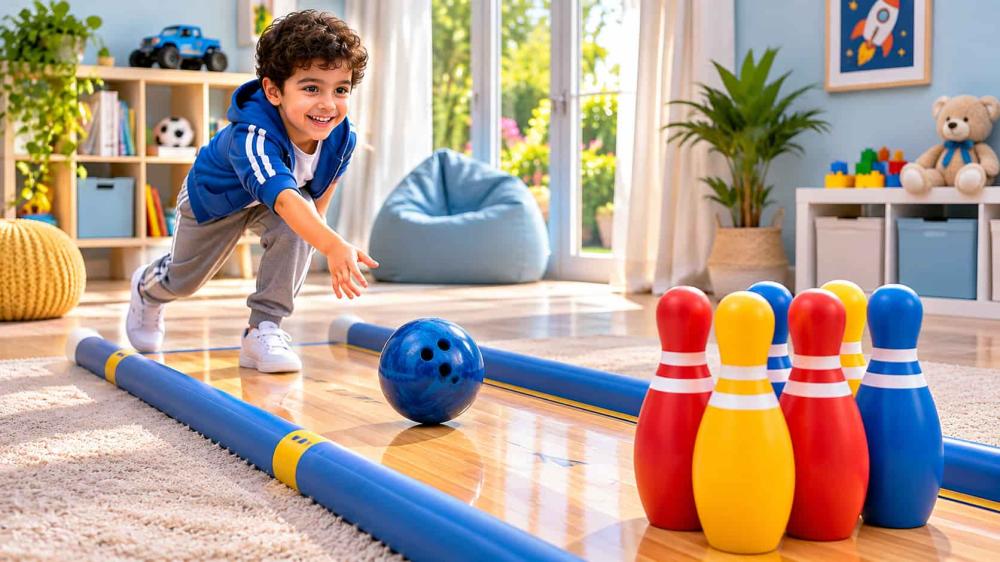
Six soft pins at seven and a half inches come with a ball, alongside a plastic bowling set with pins & six scorecards, f...
The Pins Go Back in the Same Order Every Time
The throw ends and your child runs to put the pins back, arranging them exactly as he first saw them: three at the back, two in the middle, one in front. He repeats that arrangement twenty times in one session without anybody asking him to.
Many parents overlook the value of that minute, and it is in fact half the game. A kids bowling game teaches sequence and order through resetting rather than through instruction, and your child builds the habit while he thinks he is only playing.
The Floor Decides the Set
Your floor decides the set before the pin count does. A soft pin falls on carpet because it is light and tips easily, while a plastic pin wants smooth tiles so the ball can slide and arrive with enough force.
Walk through your home and note where your child will actually play, the tiled hallway or the furnished living room. That walk answers the material question in a single minute.
The Soft Set of Six Pins
The soft set holds six pins at seven and a half inches made from a yielding material, along with a ball of the same stuff. The pins fall quietly, spare a bare foot and scratch nothing as they roll under the sofa.
This set suits children from three because the pieces are large and light at once. A small hand lifts it with no effort, so he plays alone instead of waiting for you to set anything up.
Plastic Bowling and the Score Cards
Plastic bowling adds counting: pins, a ball and six cards where a child records his result after each round. The card turns play into a match with a beginning and an end rather than open-ended throwing.
The cards suit a child who has begun to know numbers, and they hand him a reason to try again. yard games for boys and bounce castles for girls carry the same play into the yard once the weather turns and the space opens up.
The Lane and How Much Length It Wants
Kids bowling wants a lane about three metres long, which is the usual hallway between a front door and a living room. A shorter lane cuts the rolling distance, so the ball arrives with excess force and scatters the pins out of any order.
Put a strip of tape on the floor at the throwing line so your child stands in the same spot every time. That line makes a real difference to fairness between two children and ends the argument that precedes each round. the basketball range and kids roller skates ask for a similar stretch, so if your hallway runs short, look at sports gear for children first.
Bowling for One Child and for Two
A child plays kids bowling alone and measures progress against his own previous score, which sets it apart from games needing an opponent present. He also plays with his brother in turns, and the game becomes a short match.
That flexibility suits a house where the number of children present changes from day to day. the home hockey table always needs two, so choose between them by how most of your evenings actually look.
What the Game Builds in Arm and Eye
The game builds distance judgement and control over push strength, two skills your child uses in footballs in team colours when he passes with measured force. He learns through trial that a hard push costs him accuracy, and nobody has to tell him so.
You notice the shift after two weeks: he starts with random shoves, then lowers the force on his own once he discovers a slower ball hits more. the motor skills section builds the same foundation before age three.
Storage and the Small Pieces
One pin out of six disappears in the first month unless the set has a fixed home, and a set with a missing pin loses its point. Give it a cloth bag or a clear plastic box your child can see, so he returns the pieces himself.
Make the reset the last part of the game rather than a chore you ask for afterwards. The trick works with every toy of many pieces and spares you a weekly search under the furniture.
Bowling Questions That Reach Baby Story
Parents ask how the soft set and the plastic set differ by age. The practical gap is that soft starts at three, while plastic gives more pleasure past five once a child can aim with precision.
Others ask about playing in flats, and what we recommend most is the soft set on a long rug. The rug swallows the sound and slows the ball slightly, so evening play becomes possible without troubling the neighbours.


