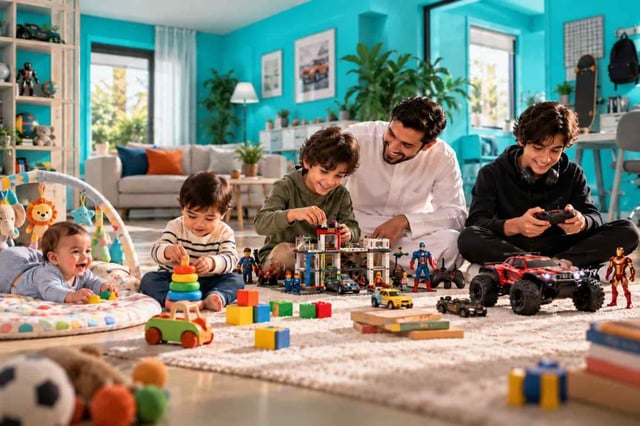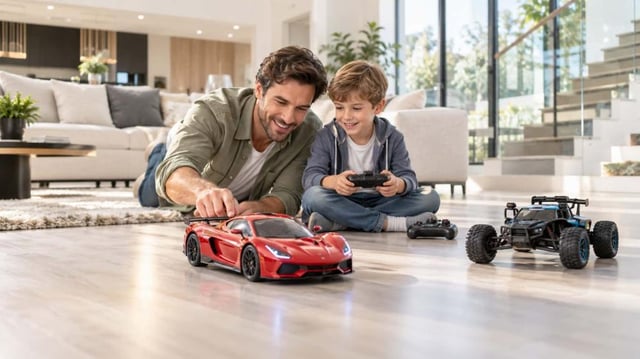

Kids bikes and bicycles from age two to ten, pedal and battery powered, in every size.
Kids bikes and ride-ons from age two to ten, pedal-powered and battery-powered, in every size.
The question we hear most in the bike section comes in one form: my child is four, which bike fits? There is no single answer, because each age is its own stage, and each stage builds a different skill.
This guide lays the stages out in order, so you can see where your child is now and what comes next.
The age ladder, two to ten
Two to three — the tricycle. Three wheels, no balancing, pedals mounted straight onto the front wheel. This is where your child learns that moving their legs moves the bike, their first real relationship with riding. See the options in kids tricycles.
Three to five — 12 and 14 inch. A real bicycle with a chain and brakes, plus two stabilisers at the back. Your child starts feeling balance without fearing a fall.
Five to seven — 16 inch. Usually where the training wheels come off. A transitional stage that asks more patience from you than equipment.
Seven to ten — 18 inch. They ride confidently and further, and start chasing speed rather than balance.
Ten and up — 20, 24 and 26 inch. Full bicycles with gears and disc brakes, spec'd close to adult machines.
Two families: pedals and batteries
The section holds two types that do not compete. Each serves a purpose.
Pedal bikes run on your child's own effort. They build leg strength, improve coordination, and teach balance step by step. This is the main track your child moves along, stage by stage.
Electric ride-ons and motorbikes run on a rechargeable battery. They build different things, but they give a driving experience many children love, and they suit limited space and smooth flooring. Find them in kids electric motorbikes.
Most families end up with both: a pedal bike for learning and movement, a ride-on for play.
Choosing now, and knowing when to upgrade
Do not buy a size up to grow into. This is the costliest mistake parents make. An oversized bike scares a child, so it sits in storage for a year while the learning window passes. Buy the size that fits today.
Size follows height, not age. The ages above are approximate. Measuring is more accurate, and the method is in kids bikes with training wheels and sizes.
When to upgrade? When their knees brush the handlebars while pedalling, or their legs bend sharply while seated. Usually every two to three years.
Practical checks before you buy
Where will they ride? A sandy yard stops a trike and exhausts a child on a pedal bike. If your ground is sand, the walkway or a nearby park is the place, and you will be the one transporting it.
Storage space. An 18-inch bike takes real room, and cargo trikes are wider than a standard hallway. Decide where it parks before you buy it.
Fitting it in the car. Sizes from 16 inch up rarely slide into a small boot. If you will be moving it often, ask about weight and dimensions first.
Heat. A Jeddah summer cracks plastic and weakens ride-on batteries. Storing in shade adds a year or more to the life of a bike.
What each stage builds
Ordering the stages is not just tidy-mindedness. Each one builds something the next cannot, and skipping a stage leaves a gap that shows up later.
The trike stage builds your child's first relationship with directed movement. They learn that their legs control speed and their hands control direction. It sounds basic, but children who skip it often struggle more with coordination when they reach a real bicycle.
The training-wheel stage builds confidence. Your child is riding a genuine bicycle with a chain and brakes, but with a safety net. This is also the stretch where they decide whether they enjoy cycling at all.
The stage after the stabilisers come off builds balance, the one skill in the sequence nobody forgets. Learn it at seven and you can still ride at forty.
The larger sizes build fitness and independence. Your child rides out with friends, covers real distance, and the bike stops being a toy and starts being transport.
Maintenance that extends the life of a bike
Children's bikes take rough treatment, and small maintenance makes a large difference to how long they last.
- Tyre pressure. A soft tyre makes pedalling heavy, so your child tires and assumes the bike is bad. Check every couple of weeks — you will notice the difference immediately.
- The chain. A drop of oil every two months is enough. A dry chain is noisy and wears fast, particularly in Jeddah humidity.
- Bolts. Tighten the handlebar and seat bolts monthly. Vibration loosens them over time, and most faults that reach us are a loose bolt rather than a real failure.
- Brakes. Squeeze the brakes and push the bike forward. If it moves, they need adjusting — and this is the single most important safety check on the whole bike.
Questions parents ask us
What age can my child start?
Age two on a light tricycle. Before that, a parent-push ride-on is the better fit.
When do the training wheels come off?
When they ride steadily and start leaning into turns. There is no fixed age, and children differ widely.
Is an electric ride-on a substitute for a bike?
No. A ride-on is a driving toy; a pedal bike is what builds balance and strength. Ideally your child tries both.
Bike or scooter?
A bike has a seat and pedals; on a scooter your child stands and pushes with one foot. Scooters are lighter and easier to store, bikes suit longer distances. See kids scooters.
Can I see the bike before buying?
Yes, at our three Jeddah branches: Ash Shati, At Tahlia and Al Basateen. With larger items, trying before buying is worth the trip.
What is worth remembering
Know your child's age and height, pick the size that fits today rather than one to grow into, and settle where they will ride before choosing a size. If they are still at the trike stage, start light. If they have passed it, training wheels are the next step.
If your child is still small for a bike, movement begins with a a rocker with a curved base and then a slide. Those past the small sizes move up to larger bikes for teens.