
Three numbers separate one drift scooter from another and the shape is not among them. Here is how to choose without pay...
Drift scooters are sold under shape nicknames rather than model numbers, which leaves parents wondering whether these are genuinely different machines or just colours of one thing.
The answer is that the outer cover changes a great deal and what sits underneath changes very little. This article explains what actually separates one model from another, and how we chose the ones we stock in the drift section.
The three numbers that genuinely differ
- Front wheel size. Between six and a half and eight inches. Wider rides over bumps and joints instead of catching on them, and it is the clearest practical gap between two scooters that look alike.
- Weight limit. Fifty kilos on our smaller models and sixty-five on the larger ones. That decides how many years the scooter serves you, not how fast it goes.
- Battery capacity in amp-hours. Between three and four point eight across our range. The difference shows in the length of a play session, not in speed.
Ask about those three before you ask about the shape, and you will find that two different names can hide one identical scooter.
What "360" means in a model name
You will often see "drift 360", meaning the scooter can spin a complete circle on the spot. It is not an added feature but the natural consequence of the two free-spinning rear casters every drift scooter carries.
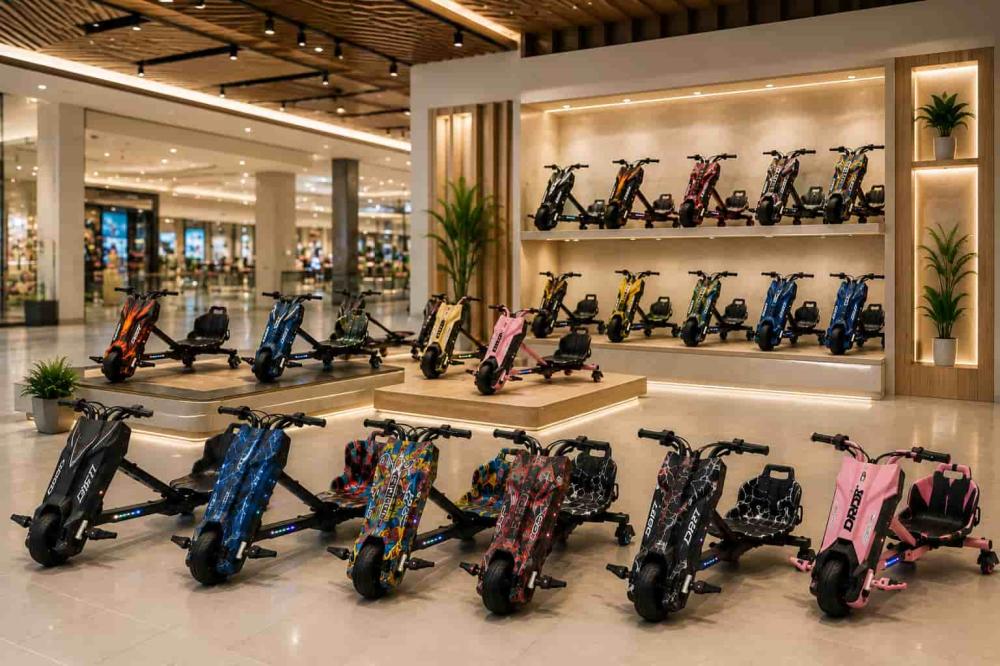
The genuine variation is that some models rotate more smoothly thanks to deck area and weight distribution. That is something you feel rather than read, which is why our drift scooters stand ready to ride in our branches instead of sitting boxed.
"Crazy", "super" and other superlatives
Words such as crazy, super, max and pro appear on plenty of models, and they are usually marketing labels with no matching specification.
Our simple rule: any adjective in a name with no number behind it in the specs should be ignored. If a seller says this model is "stronger", ask stronger by how many watts and how many amp-hours.
The reverse holds too: a model with a very plain name may carry the best numbers on the shelf, because whoever named it did not need an adjective to sell it.
What genuinely changes from shape to shape
The front plastic cover is a cosmetic piece sitting on what is nearly one shared frame across most models. But three details shift with it and nobody mentions them:
- Seat height off the ground. Some covers force a seat several centimetres higher, which matters for a child with shorter legs.
- Side pedal area. Wider is kinder to a bigger foot; narrower makes a child curl their toes.
- Where the mic and buttons sit. Some layouts place them within reach while riding, others put them behind the rider where they never get used.
All three are visible to the eye in two minutes standing next to the scooter, and invisible in a single front-facing photograph.
The shape sells, and children know it
We are not dismissing the outer cover. A child chooses with their eyes, and a shape they love gets ridden daily rather than once a week.
So our rule for parents: let your child pick the shape from two models you already filtered by the numbers. They get the decision and you keep the boundaries, which is the same split we recommend for helmets by size.
Baby Story models and what they share
All our scooters run at thirty-six volts with three speeds, front and underbody lighting, light-up wheels and a built-in mic. What separates them is the three numbers above, not the voltage.
We picked them on one criterion: that their figures are published and verifiable. Which is why our shelf carries fewer shapes than you will see elsewhere, and clearer numbers.
The rest of the electric range sits in kids electric scooters. If your child is under six, drift is not for them yet, and their place is the three-wheel scooter.
What wears out first on any model
A question that comes before choosing a shape: which model lasts longest? The answer is that the two free-spinning rear casters are the first thing to go on every model without exception, because rubbing and sliding is their job.
So do not ask which model has casters that never wear. Ask how long they last on your ground specifically. Smooth tile stretches their life many times over compared with sand.
And what about "new" and "this year's model"?
The outer cover and the colours change almost every season, while the frame and motor stay put for years. So the "new" model is usually the same machine wearing a different shell.
That is not a criticism; it means you lose nothing by buying last season's shape if its three numbers are better. Occasionally we advise exactly that: a model a year old whose behaviour is known beats a shell that landed last week.
Choosing your child's model at Baby Story in one minute
- Start from your child's weight rather than their age, and pick a weight limit comfortably above it.
- Then choose wheel size to match your ground: wider for uneven surfaces.
- Then amp-hours to match how long your child usually plays.
- And finally let them pick the shape from whatever remains.
To see the difference in person, our scooters are ready to try at the Shatea, Tahlia and Basateen branches. Add a lock from scooter locks and bags, with the remaining sections in the kids scooter range. For a vehicle with a steering wheel rather than a bar, see electric cars with a steering wheel.