
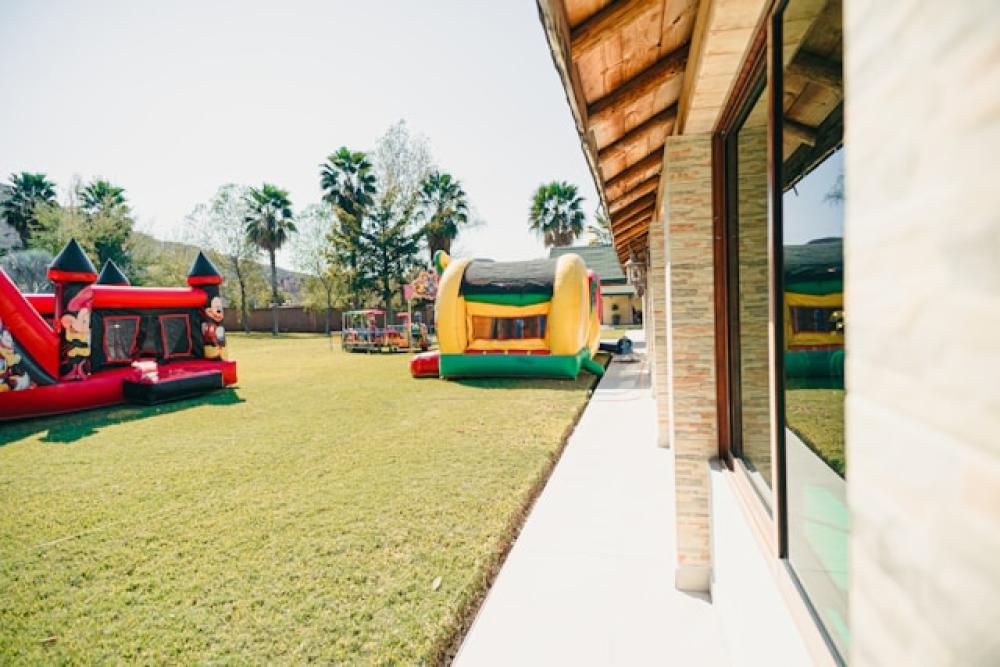
A rest house hosts ten children at once, not just one. How to set up a wide space that serves every age group at the sam...
A rest house is nothing like a home. The space is wider, the children more numerous, the visit longer, and the use seasonal rather than daily.
Those four differences change every buying calculation.
1. Why the home plan does not transfer
- A single-user piece becomes a bottleneck rather than a pleasure.
- A wide age range means one piece leaves half the children with nothing.
- Intermittent use means weeks of sun exposure without anyone playing.
- No daily oversight means maintenance gets forgotten.
2. Choose capacity, not appeal
- A large trampoline handles several children in fast rotation.
- A combo playset offers three motions in one frame.
- A sand and water table takes four standing around it.
- A large inflatable bouncer holds a whole group.
3. Cover the whole age range
- A rocker for under-twos.
- A slide or playset for two to six.
- A trampoline for three up to ten.
Those three cover an entire rest house; anything beyond is luxury rather than need.
4. The sun is harsher here
Rest houses usually sit exposed with no walls casting shade. A piece left unshaded degrades in two seasons rather than five.
A simple fabric canopy over the play area costs less than replacing pieces, and doubles the usable hours in a day.
5. Intermittent use needs its own routine
- Inspect every piece on arrival before children climb on.
- Keep a closed box of small tools on site.
- Cover what can be covered before leaving.
- Keep a basic tool kit at the rest house rather than at home.
6. Farms and open ground
Uneven ground is the commonest problem on farms. A frame set on soft soil tilts gradually over weeks.
Level a small patch under the piece before assembly, or lay a firm base. Half an hour that preserves the piece for years.
7. What suits travelling and moving
- An inflatable bouncer inflates, folds, and rides in the car boot.
- Light tables move easily and serve every visit.
- Bikes travel best of all and gain most from open ground.
8. Lighting extends the evening
Most rest house visits run into the night. Two floodlights over the play area keep it working after sunset, which is the best play window across most of our year.
9. Who supervises and who tidies
A large space with many children needs one adult watching, not five assuming someone else is. Agree who it is before the gathering, and rotate through the evening.
One box for small parts, emptied before everyone leaves, saves the next visit from starting with a search.
10. Cost shared across everyone
A rest house serves several families, and so can its play corner. Splitting the cost turns a modest budget into a combo playset and a trampoline rather than one small slide.
11. Seasons work differently in a rest house
Rest houses fill in winter and empty in summer, the opposite of a home yard. Buy for the cool months and store properly through the hot ones, rather than leaving everything out all year.
12. A rented rest house
If you rent rather than own, portability beats permanence: inflatable bouncers, light tables, and folding pieces travel between bookings. Anchored frames do not.
13. Three mistakes we see in rest house setups
- Everything sized for older children, leaving toddlers with nothing.
- All pieces clustered in one corner instead of spread out.
- No shade, which shortens every session to minutes.
14. What we suggest at Baby Story for rest house owners
Start with one large piece that holds a group, then add something for the youngest. That order covers most visits at the lowest cost.
Browse large kids toys and playhouses, or visit one of our three Jeddah branches to ask what withstands group use.